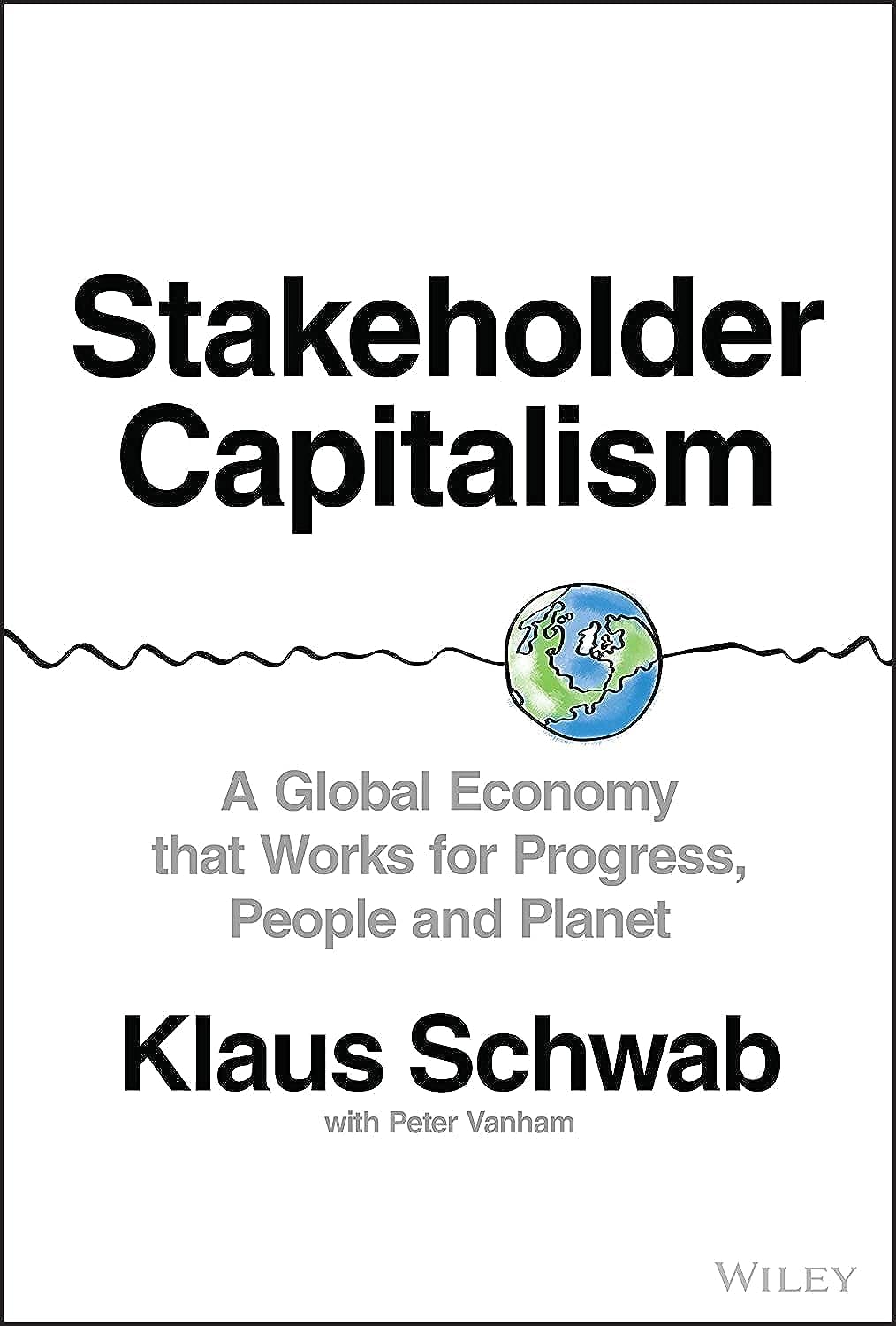
Stakeholder Capitalism, by Klaus Schwab
Book title and author
Title: Stakeholder Capitalism
Author: Klaus Schwab
Genre: Politics/Current Affairs
Publication year: 2021
My rating: 4/5
Introduction:
I chose this book because of my familiarity with Klaus Schwab, founder of the World Economic Forum. I have been following the WEF Annual Davos Summit for many years now, and when I saw this title I had to read it because of Klaus Schwab’s recognised expertise in this area.
What this book is about:
This book is about developing a sustainable economy that works for people, progress and planet. It is about the prevailing economic order present after World War 2, it’s benefits and costs to the environment and society at large. It postulates the formation of a new economic order that goes beyond shareholder capitalism – the pursuance of profits for shareholders at cost to the environment and broader society, in favour of a more inclusive economic system.
Key Ideas and Themes:
An alternative – stakeholder capitalism
Schwab argues that prevailing economic systems have produced enormous wealth and prosperity but have generated serious problems such as climate change, increased inequality and social divisions. His alternative is stakeholder capitalism – businesses that consider the impact of their business holistically as opposed to being primarily focused on short term profits for shareholders.
Reliance on GDP measures
Schwab argues that whilst GDP is a good measure of economic success it is fundamentally limited as it doesn’t provide a complete picture of human well being. As a result, Schwab argues that society needs broader measures of economic and social progress.
The Rise of Asia
Countries such as China and the Asian tigers have benefitted from the following
- Globalisation allowing production and investment across borders
S - Special economic zones
The rise of China has illustrated that different economic models can result in rapid growth. There is no simple Western monopoly on successful economic development.
What I liked
- Schwab demonstrates considerable foresight with regards to economic development
- Schwab understands that a fairer, more inclusive society needs to reform the existing economic form of capitalism
- Despite listing the costs of shareholder capitalism and the existing economic model, Schwab appreciates the increases in wealth and prosperity that this model has resulted in, for different countries across the world
What I didn’t like
- Schwab doesn’t provide sufficient examples of how a stakeholder capitalism model would work in progress
- Corporate examples of the stakeholder capitalism model are not provided
Key Takeaways
- Capitalism should not be abandoned, but reformed
- The market economy capacity for innovation, competition and investment should be preserved
- Short term-ism should give way to Long term-ism
- Broader measures of economic progress should replace GDP
Conclusion
This is an excellent book which guides the reader to understand how we arrived at the current economic system, its benefits, costs and disadvantages. It provides a working model of a future more inclusive economic system that preserves the benefits of the old model, without the costs that it incurs.
Verdict:
4.5/5