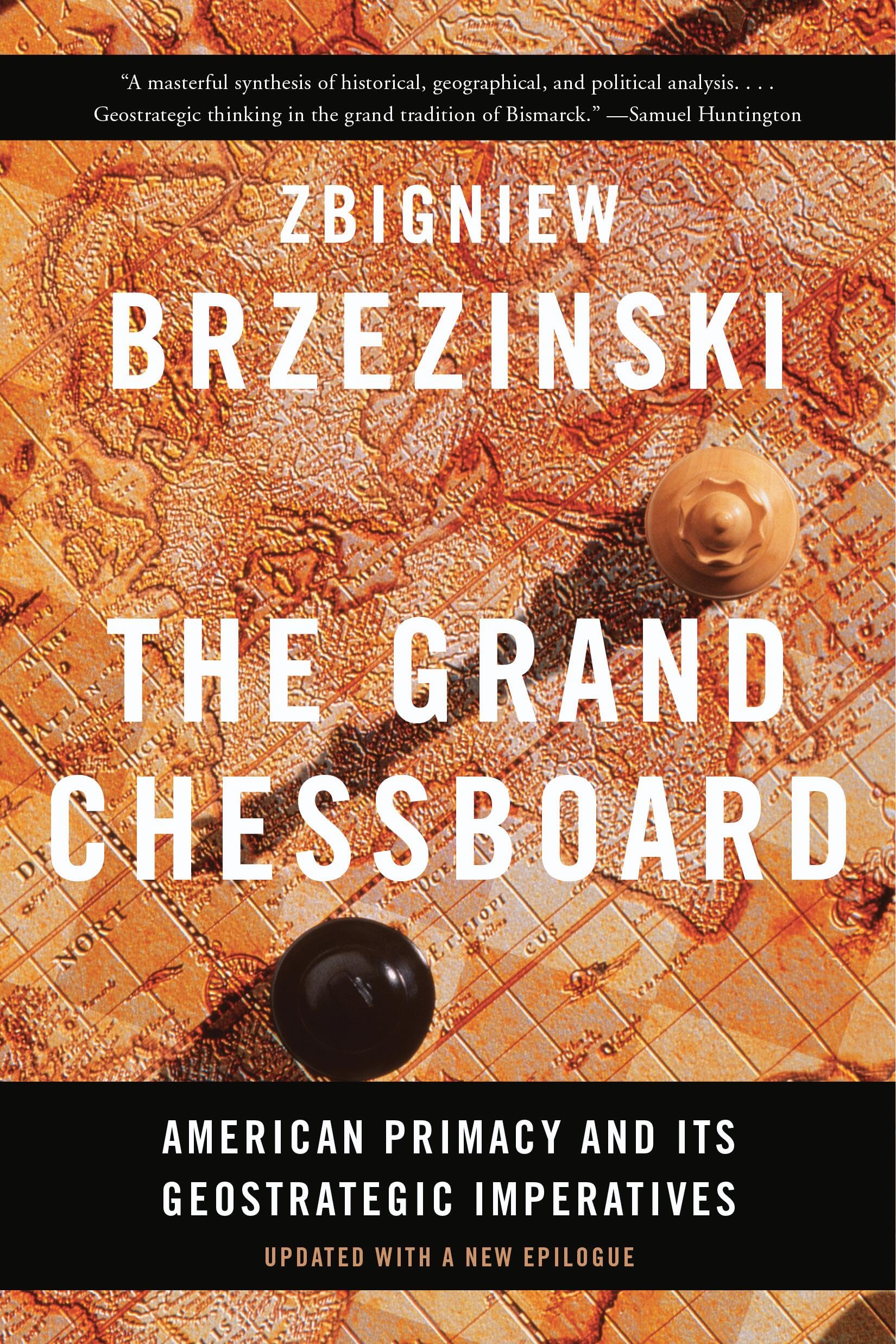
The Grand Chessboard, by Zbiegniew Brzeskinski
Book title and author
Title: The Grand Chessboard
Author: Zbiegniew Brzeskinski
Genre: Politics
Publication year: 2016
My rating: 4/5
Introduction:
I chose this book because of my familiarity with Zbiegniew Brzeskinski as National Security Advisor during the Carter presidency. I have watched some of his interviews, and I knew he was analytical and gave a lot of though to issues of current affairs. For this reason when I saw that he published “The Grand Chessboard”, I thought its definitely a read.
What this book is about:
This book is about the role of America in Eurasia, and how to maintain American primacy in the geopolitics of the Eurasian region. It explores strategies for the maintenance of American interests in the region, and the changing landscape of the Eurasian landmass.
Key Ideas and Themes:
Eurasia as the world’s Geopolitical Center:
Brzezinski argues that Eurasia contains
- Most of the world’s population
- Most Economic production
- Major military powers
- Critical energy resources
Therefore he argues that control over Eurasia influences global power and American strategy must focus primarily on Eurasian developments
Regional Analysis:
Brzezinski argues for expansion of institutions such as NATO and integration of Central and Eastern Europe into Western structures
Brzezinski believes Russia would struggle to maintain superpower status. He also mentions that Ukraine is central to Russia’s future geopolitical orientation
China is viewed as the most likely long-term challenger to US dominance. Brzezinski recommends engagement with China rather than containment, and he favours integration into international institutions
What I liked
- Brzezinski was able to identify Ukraine as key to the geopolitics of the region, well before the Russia-Ukraine war which we’ve seen in the last couple of years
- His calls for integration rather than containment when it comes to China, have been met, for example by the integration of China into the WTO (World Trade Organisation)
- Brzezinski correctly identifies the importance of Eurasian energy trade corridors, and this is prescient today with the US-Iran conflict and closure of the Strait of Hormuz
What I didn’t like
- Brzezinski fails to identify the expectations of Russia as a key actor on the global stage. Many examples of Russia’s key position are evident today such as interference in the US elections
- The expectations of continues US global dominance are far-fetched – the world is slowly moving beyond a unipolar system and spheres of influence are emerging
Key Takeaways
- Eurasia is the strategic center of global politics
- US power depends on preventing the emergence of a Eurasian hegemon
- Alliances are more powerful than unilateral action
- Geography remains a fundamental driver of international affairs
Conclusion
On the whole this is an excellent book which guides the reader towards an understanding of the Eurasian region – its key actors, geography and competing forces and pivots. I would like to see a sequel to this book which examines the Eurasian region in greater detail and takes into account new developments such as the Ukraine-Russia war and the US-Iran-Israel conflict
Verdict:
4.5/5